| |
|
Drinking water in Turkey.
Is water safe to drink in Turkey?
Drinking water to quench one’s thirst is so popular in Turkey that
there is a special word in the Turkish vocabulary expressing the
need for water – “susadim”, literally translated meaning “I’m in
need of water” and in that case nothing else will do to quench the
thirst of the requestor, who won’t accept anything in its place.
Accordingly, water can be obtained from a wide variety of sources
and here’s a little guide for visitors, which of these provide safe
water and which ones are to be treated with caution.
|
|
| |
Drinking water to quench
one’s thirst is so popular in Turkey that there is a special word in
the Turkish vocabulary expressing the need for water – “susadim”,
literally translated meaning “I’m in need of water” and in that case
nothing else will do to quench the thirst of the requestor, who
won’t accept anything in its place. Accordingly, water can be
obtained from a wide variety of sources and here’s a little guide
for visitors, which of these provide safe water and which ones are
to be treated with caution.
The safest way to obtain clean drinking water is of course to buy
bottled water from shops. Ask for “Su” and you will probably
encounter many well-known brands such as
Pinar,
Erikli,
Kardelen,
Damla and
Lido, to name but a few. They originate from different
regions of Turkey’s mountains and are of good quality. This bottled
water is generally “still” – if you are after the sparkling variety,
ask for “Maden Suyu” (mineral water).
If you aren’t near a shop, try to find any of the numerous fountains
scattered throughout towns and villages. You can’t miss them as they
are generally beautifully ornamented – many of them originate from
the period of the Ottoman Empire and bear the Sultan’s signature -
and there will almost always be others waiting in a queue to get
water. Many families cover their entire demand of daily drinking
water by filling several large bottles at a fountain. These are then
either carried or wheeled home several times a week. This fact alone
shows that these sources, which are fed by old wells, are safe to
use.
They seem a lot safer than the water provided to households coming
from the tap. Depending on the area, this can be safe drinking water
and the key here is undoubtedly where the water originates from.
Water in a village supplied by local dams in a mountainous area is
almost always cleaner than that provided to households in larger,
industrialized and more populated cities. While the Turkish water
authorities constantly invest in building new treatment plants and
updating their existing ones, the standards are not yet quite up to
guidelines of other industrialized nations. In fact, household water
is being treated, but in some cases to such extent that it emits a
smell of chlorine – definitely not for consumption.
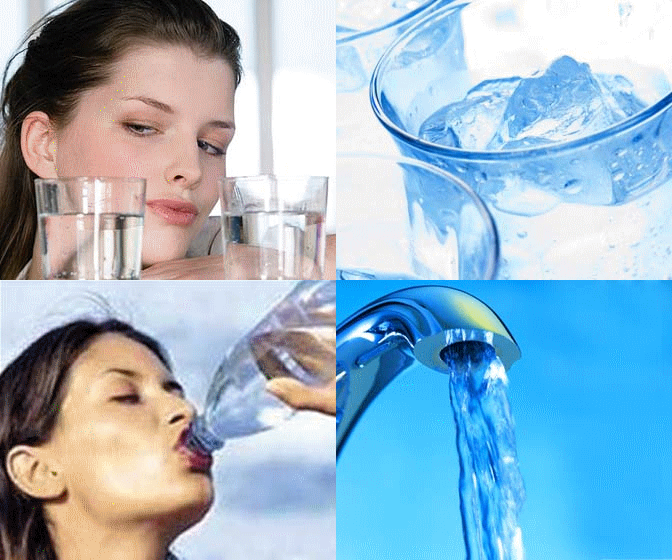
Needless to say restaurants therefore only serve bottled water, but
one should be careful with drinks containing ice cubes. These are
often made from tap water, therefore pose a potential risk and
should be avoided.
And should you ever come across “holy water”, have it! It’s water
brought back from the pilgrimage to Mecca, the holy centre of Islam.
If someone offers it to you, it means you are a special person in
their eyes. This water called "Zem zem"
|
|
 CITIES